

The Path to Practice
The path to a career in healthcare rarely begins in a hospital. At Baylor, it starts with mentorship and uniquely tailored academic paths that help students discover not only what they want to do but who they are called to serve.
Whether pursuing nursing through the Louise Herrington School of Nursing, preparing for medical school through a pre-med program or exploring specialized health sciences in the Robbins College of Health and Human Sciences, students are equipped with the knowledge and purpose to thrive in rapidly evolving fields. From developing clinical skills to stepping into practice with confidence, Baylor programming and faculty support students even beyond graduation.
Support for the Journey
For many students, the first step toward a career in healthcare is not knowing exactly where they will end up. Rather, it is discovering the possibilities. Baylor’s Prehealth Studies program helps students explore those possibilities while building the academic foundation, experiences and confidence needed to pursue their calling.
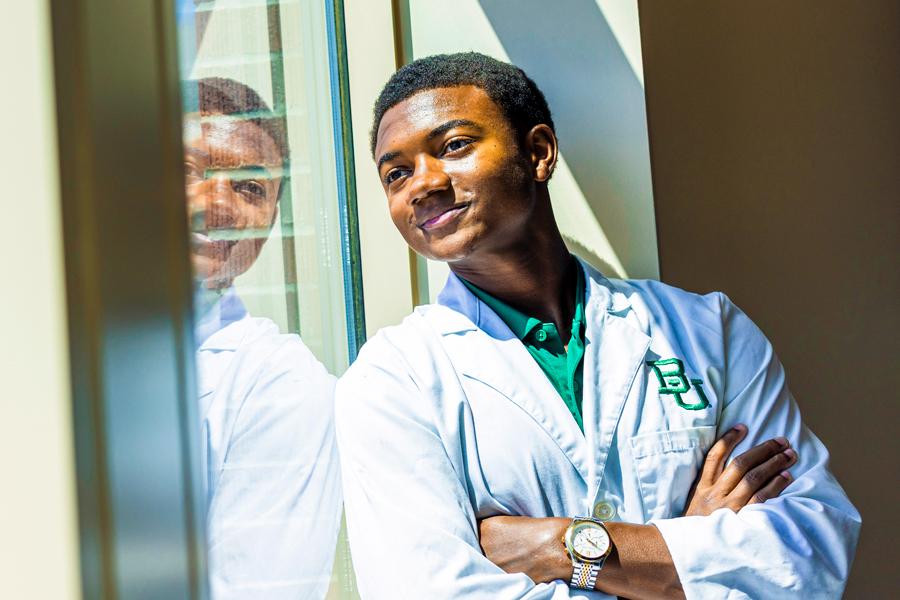
Andre Scott, a junior biology major on the pre-medicine track within Prehealth Studies, entered Baylor knowing he wanted to pursue a career as a cardiologist after his grandmother underwent a triple bypass heart surgery.
“In Prehealth Studies, they give you so much support, so much guidance, and they give you a blueprint of what you’re supposed to do,” Scott said. He emphasized that the journey is not one prehealth students take alone. Instead “from the jump, you know what it will take to apply to medical school as a competitive applicant and what applying will look like.”
As a first-generation college student, Scott believes this level of support has been instrumental in informing what kind of doctor he wants to be and how to navigate the path to get there.
Rich Sanker, Ph.D., director of Prehealth Studies, described how students at Baylor are getting more than a blueprint for graduating with the necessary coursework and competencies.
“Our program is structured in a way that it engages the students in their first year and not only puts them into the curriculum that they need — basic biology, chemistry, physics and mathematics — but draws them into a community where they’re mentored and supported in that curriculum. And at the same time, students are proactively advised so that they’re getting engaged in outreach, service, leadership and research activities.”
With advising tracks for pre-medicine, pre-dentistry, pre-physical therapy, pre-occupational therapy, pre-physician assistant, pre-veterinary medicine, pre-pharmacy and pre-optometry, the program helps students develop the professional competencies and navigate the curricular expectations for admittance to graduate programs.
Prehealth Studies provides meaningful exposures to healthcare settings through three main approaches: student organizations that facilitate networking and service opportunities; relationships with Baylor College of Medicine and local healthcare systems like Waco Family Medicine, Baylor Scott & White Healthcare and Ascension Health; and Baylor Bridges, a program that involves alumni mentors and facilitates shadowing and research opportunities.
Scott’s goals during his time at Baylor have been informed by opportunities such as these. A shadowing experience as a clinic volunteer at Waco Family Medicine led him to pursue a certificate in Spanish for medical professionals at Baylor, because he realized it would allow him to better care for more patients. Additionally, his participation in the Laparoscopy Lab, a student-founded lab that allows undergraduates to train on a laparoscopic surgical box to gain proficiency in the same exercises used by surgical residents, not only allowed him to participate in the only undergraduate laparoscopy research lab of its kind but helped refine his reasons for wanting to pursue a healthcare profession.
“As I learned different surgical skills, surgical tools and what surgeons do in the operating room, I found it very interesting. And it made me realize I want to make an impact in a patient’s life through being present with them and educating them and being alongside them every time they come to the office rather than through surgery,” Scott said.
Sanker said that Baylor students stand out through academic competency, community and professional leadership — an assessment that resonates with why Scott chose Baylor.
“I knew Baylor was the place to go because of those three things — faith, a community of belonging and rigorousness,” Scott said.
“The people who elect to come to Baylor have a drive and they push themselves to grow in a way to be truly transformational in all the work that they’re doing. They push each other, they invest in each other, they want to make the community a better place,” Sanker said.
The support for Prehealth Studies students doesn’t always stop at graduation. As medical schools become increasingly competitive, a gap year for students to gain additional clinical exposure or research experience is becoming common.
“Our students are able to go to any institution in the country from the experiences gained from Baylor,” Sanker said, should they choose that path with persistence. “We will work with our students, our alumni, until they successfully become a candidate to a professional school. We won’t ever stop supporting them or giving them the resources that we can to lift them into that competitive space,” he added.
From Classroom to Clinic
Like Prehealth Studies, the Health Science Studies program in the Robbins College of Health and Human Sciences pairs academic preparation with mentorship and hands-on experiences. Its integrated curriculum gives students another way to prepare for careers across the health professions. From coursework requirements and a clinical academic internship to hands-on advising and specialized chapel opportunities, the major prepares students for entry into graduate education for health professions; the major includes concentrations for most of the same tracks in Prehealth Studies, with the addition of pre-athletic training and health professions.
“Ultimately the medical schools graduate schools that students apply to don’t specify an undergraduate major in preparation, but there are majors that are going to help students streamline the process and help them be well-prepared to apply to those professional graduate programs,” said Tricia Blalock, P.T., D.P.T., director of Health Science Studies and clinical associate professor.
Despite the large number of students enrolled in the major — more than 900 — students still benefit from high-touch advising that not only keeps them on track to meet career goals but ensures that they are pursing the right calling.
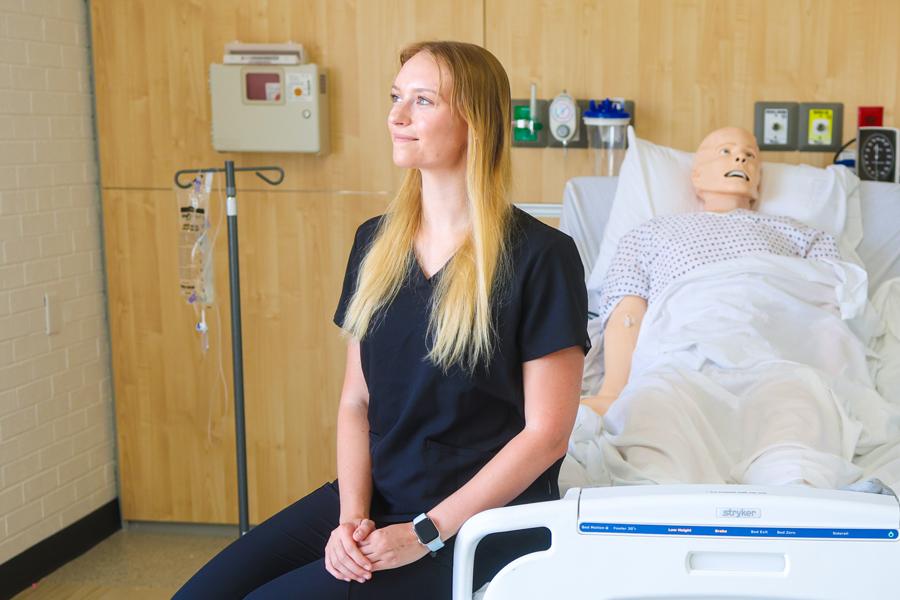
Jessica Jost, a senior Health Science Studies major with a concentration in pre-physicians assistant (pre-PA), entered Baylor as a biochemistry major with a pre-med designation before she quickly discovered that she wanted to switch to the pre-physician assistant track.
“They do a really good job aligning your major with exactly what school you want to go to,” Jost said.
The personally tailored structures of Baylor’s pre-health programs helped her navigate not only what major and concentration would help her thrive in her education, but what kind of career she wanted to pursue.
“It was actually the foundations of medicine, intro to medicine course. I took that as a freshman,” Jost recalled. “And one of the weeks in that course was teaching about different healthcare routes. I really didn’t know anything other than dentist and doctor. That was it for me. It really just showed all these different paths that you could take to still become a provider or a clinician, but that were different than just being a doctor.”
After attending Pre-PA Society events and talking to upperclassmen, she quickly switched not only to a pre-PA concentration, but to the Health Science Studies major.
“I wanted a more well-rounded humanistic approach to medicine. I didn’t want to go into PA school with just all the information about the body, but also how to talk to a person.”
The program equips students with these capacities. As Blalock explained, “I think when Baylor students are applying to graduate programs, those programs know that they have been through a rigorous undergraduate curriculum. For Health Science Studies, specifically what helps our students succeed and to do well and be competitive is that introduction to the actual clinical skills before they ever get to their graduate program and their internship requirement.”
Jost completed her clinical academic internship on a study abroad trip designed for prehealth students in Robbins College. She also volunteered with Waco Family Medicine for three semesters through the student Pre-PA Society. More than that, it is apparent to Jost that her professors model a deep devotion to God, their patients and their students, an element that Blalock said is woven into the fabric of the whole-person development of students.
“They don’t want you just going through the classes that you need to do and checking boxes, but they want you actually putting your hands to work and applying the things that you’ve learned, seeing something that you haven’t seen before.”
The summer after her first year, Jost gained her medical assistant certification. She was then hired at Allergy and Asthma Center in Waco in the spring of her sophomore year, where she still works and is gaining real-world experience before she begins PA school next fall at Hardin-Simmons University in Abilene.
“I feel like, at Baylor, I never have felt once like I’m doing it by myself,” Jost said.
Jost plans to graduate in December 2026 with intention of becoming a physicians assistant in orthopedic and sports medicine.
“As future healthcare practitioners, I think these students are going to be innovators and they’re going to be patient-centric,” Blalock said. “I think we’re preparing them to be very person-oriented, others-oriented.” There’s an element of humility, she added, “recognizing that it isn’t about them, it’s about who they’re providing care for. That excites me — their ability to see humanity and what they can do to promote the human person.”
Called to Care
For nursing students, that preparation ultimately leads to the bedside — where knowledge, skill and compassion come together in service of patients and families.
Jordyn Butler, B.S.N. ’26, didn’t take the direct path to a nursing degree. Although her mother was a nurse, which offered a degree of familiarity within the profession, she started out at Baylor studying fashion with an interest in international business. The summer before her junior year, she served a week at a special needs camp.
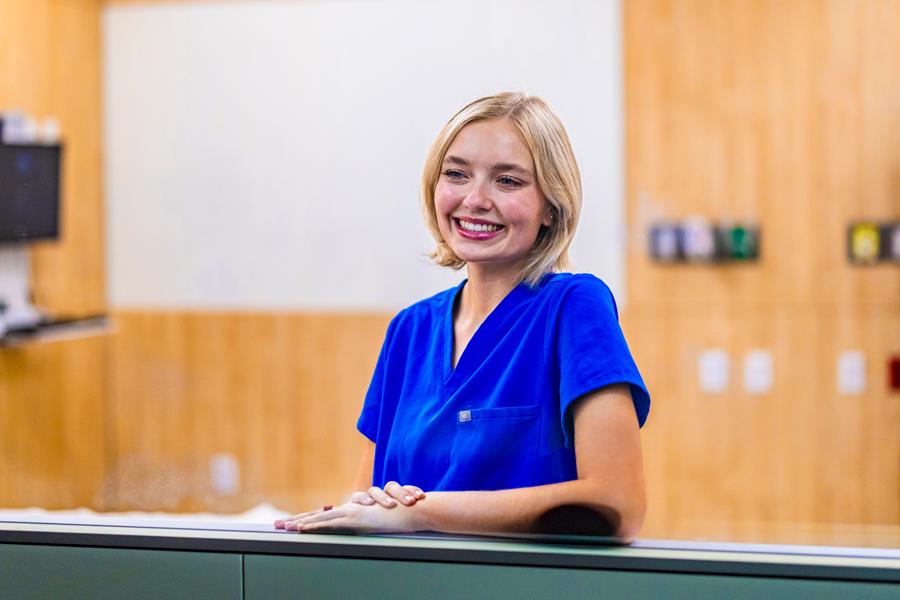
“During that week, I felt the Lord calling me back to nursing,” Butler said.
Changing her academic focus could have quickly set Butler a year behind on coursework, especially since Baylor nursing students complete the first two years of their degree in Waco before transfering to the LHSON campus in Dallas.
“As time went on, especially in nursing school at LHSON, it’s clear that the faculty care for you. There are professors who actually walk with you and make sure you get the courses you need. It’s very personal.”
The intentionality with which faculty helped her change professional and academic plans allowed Butler to complete the nursing program in the traditional four years. Now, she is in a 12-month residency program in the NICU at a hospital in Dallas after having graduated in May 2026.
For students who change majors, like Butler, or those who enter Baylor with a clear path toward nursing, there is a team in Waco to help advise students even before they reach the Dallas campus. This begins during the first year with a nursing-specific New Student Experience course taught by nursing faculty in Waco, and the hands-on guidance continues throughout their four years.
In addition to classroom knowledge and gaining clinical skills, the program equips students to succeed in time-management, scheduling, practice interviews and résumé workshops.
“Informally, we have an open-door policy,” said Lisa Jones, D.N.P., R.N., associate dean for the pre-licensure programs and clinical associate professor at Baylor’s Louise Herrington School of Nursing. “All of our faculty and staff have ways and means of communicating with students, whether it’s office hours or virtually. We do a pretty good job of making the resources available to students to ask questions, get a pep talk, cry it out and celebrate their successes.”
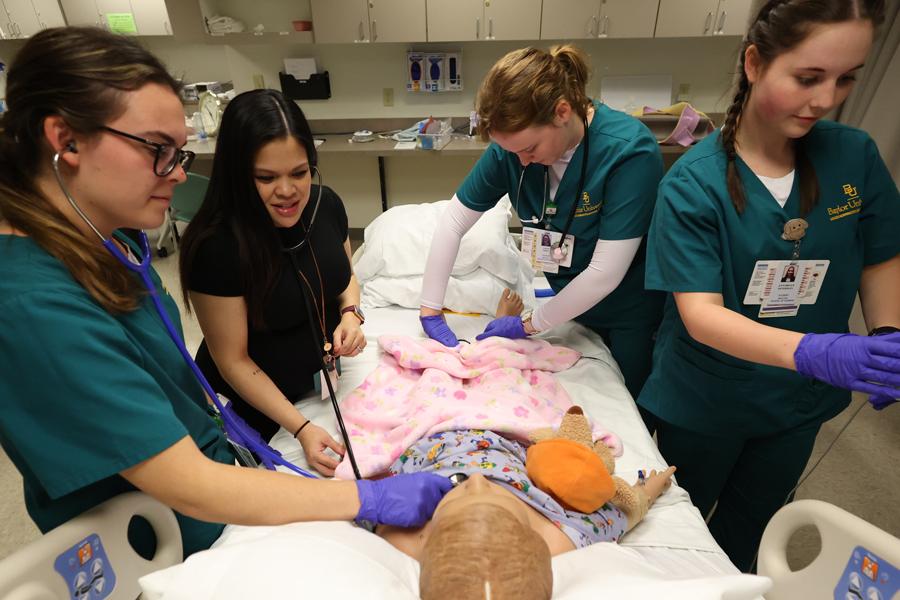
The curriculum is designed to match what students learn in the classroom to clinical experiences. Simulation labs prepare students for scenarios they may not typically see in clinics, and the capstone project teaches independence in a clinical setting. Additionally, the program looks to build leaders in healthcare through an emphasis on research skills.
“When they do graduate, they’re much more confident compared to other new applicants,” Jones said. “Our clinical partners look for our graduates to hire.”
The heart of preparing future nurses at LHSON, however, is teaching them patient-centered care.
“I think one of the best things that we do here at LHSON is that we not only teach students how to ensure that they take care of themselves, but we also create an environment where we want them to show that they’re compassionate, that they are loving and that they truly care about the whole person,” Jones said.” Part of our framework, which we call the human need framework, is we’re not just taking care of a disease, but we’re taking care of a person that’s connected to a family, to a community, to a group.”
Butler credits the rigor of her coursework, the variety of clinical and simulation experiences and the emphasis on leadership development with the confidence she feels as she begins her nursing career.
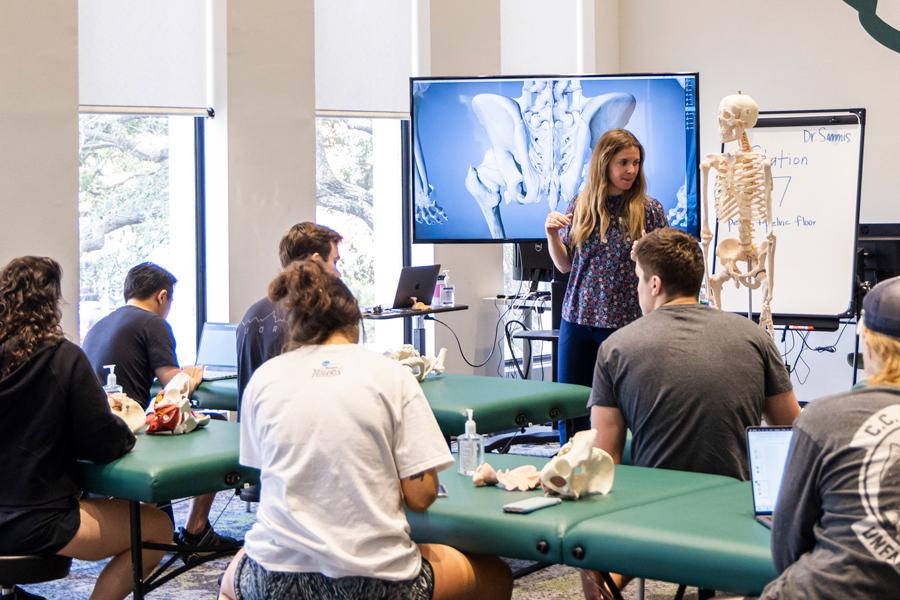
“I have heard people say, ‘You can always tell a Baylor nurse,’” Butler said. “I definitely feel like a better leader, better person and not just in terms of knowledge or skills. I feel like I can really understand someone and be an advocate for someone, sit and listen and just be a comfort to someone, so I feel like Baylor teaches us that really well.”
Tomorrow’s Healers
The next generation of healthcare professionals will need more than technical expertise. They will need the ability to listen, understand and care for the people behind the diagnoses. This commitment to patient-centered care is a throughline in how Baylor prepares students for healthcare professions.
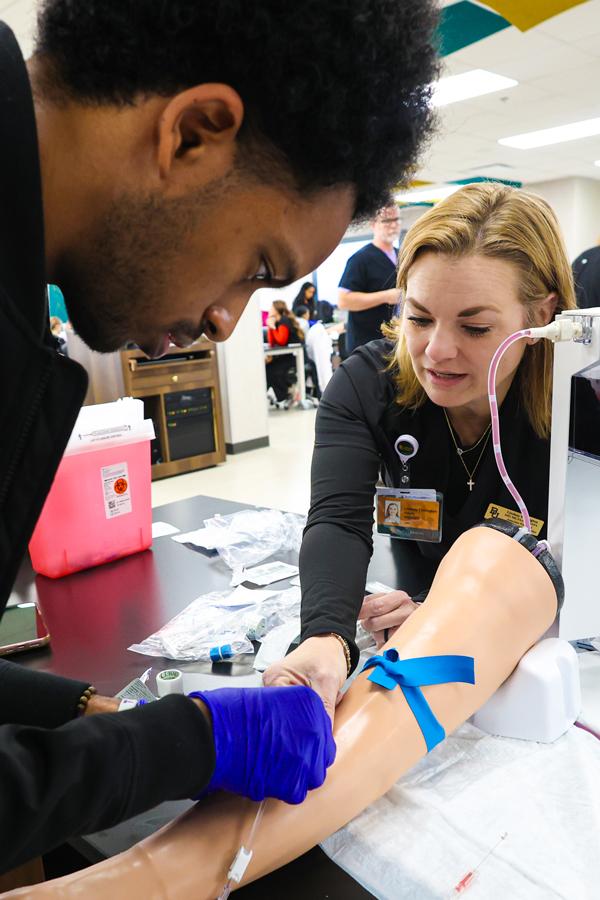
Across the University, students are preparing for healthcare careers through programs that reflect Baylor’s holistic approach to patient-centered care and holistic healing. Medical Humanities invites students to consider ethical and spiritual issues that they will encounter in healthcare and explore the deepest meanings of health and healing. Meanwhile, Robbins College prepares students for a variety of allied-health careers beyond the Health Science Studies major, including exercise physiology or public health careers that equip students to enhance the quality of life for individuals and communities.
No matter the pathway, Baylor is preparing students to do more than treat disease.
They are equipped to lead with knowledge, serve with compassion and care for the
whole person.